Patterns of the Month | 50% off


Summer Durability Guide
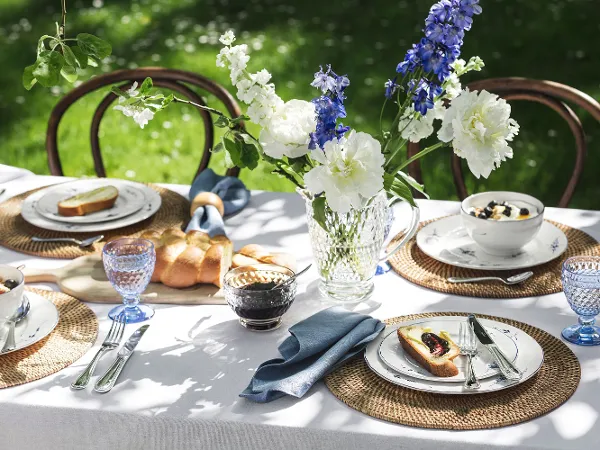
Porcelain vs. Stoneware for Outdoor & Casual Living
Summer entertaining moves the table outside, and that changes what you need from your dinnerware. Poolside lunches, patio dinners, and backyard gatherings put more wear on plates and bowls than a quiet weeknight meal indoors, so durability moves to the top of the list, right alongside style.
Summer Durability Guide
Porcelain and stoneware are the two materials best suited for that kind of casual, high-traffic summer use. Both can go the distance outdoors, but they get there in different ways; and knowing how each performs helps you build a table that can handle everything from a spontaneous BBQ to a long, slow patio dinner.
We're breaking down how porcelain and stoneware hold up outside, so you can choose the right material (or mix both) for a summer of casual entertaining.

Porcelain: Lightweight Durability for On-the-Go Summer Meals
Porcelain is fired at very high temperatures, giving it a dense, chip-resistant surface without adding bulk or weight. That combination is exactly what makes it a strong choice for outdoor dinnerware: easy to carry from kitchen to patio, easy to stack for storage between gatherings, and sturdy enough for regular rotation all season long.
Porcelain tends to stand out for:
- Chip and crack resistance: a dense, high-fired body that holds up to the bumps and quick transfers of outdoor serving
- Lightweight handling: easy to carry outside in stacks, ideal for buffet-style summer entertaining
- Dishwasher- and sun-safe: built for frequent washing and sitting out in the heat without warping or fading
If you're building a set for outdoor and casual living, porcelain dinner plates are a natural foundation, neutral enough to layer with textured stoneware serveware or a bold outdoor tablecloth.
Best for: poolside meals, picnics, and any summer gathering where dinnerware needs to travel, stack, and get washed often without losing its finish.

Stoneware: Built to Handle Casual Wear and Tear
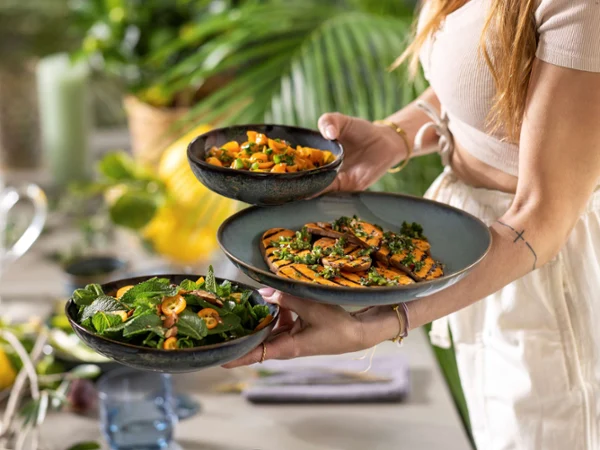
Stoneware is fired at a slightly lower temperature than porcelain, which gives it a thicker, denser body. That extra substance means stoneware can take the knocks of casual outdoor dining in stride, while its reactive glazes give every piece a one-of-a-kind, sun-ready look.
Stoneware tends to stand out for:
- Heavier, harder-wearing body: a thicker profile that resists chipping during casual, high-traffic outdoor use
- Heat retention: keeps food warmer longer during long patio dinners as the evening cools
- Weather-ready character: handcrafted texture and irregular glazing that hide the everyday scuffs of outdoor living better than a glossy finish
Where porcelain keeps things light and easy to move, stoneware brings a grounded, handmade feel that suits backyard and farmhouse-style entertaining. It's the material built to look better, not worse, after a summer of regular use.
Best for: backyard cookouts, long outdoor dinners, and casual tables where a slightly rustic, textured look is part of the appeal.